The Future of Artificial Intelligence in Everyday Life Now
Editorial Team Artificialintelligence-Tech
Artificial intelligence is no longer a distant concept reserved for research labs or science-fiction movies. It has quietly become part of our everyday lives — shaping how we work, communicate, learn, shop, and make decisions.
From personalised recommendations on streaming platforms to intelligent assistants on our smartphones, AI is already embedded in daily routines. As technology continues to advance, its influence will become deeper, more subtle, and more personal. Understanding this shift is no longer optional; it is essential.
This article explores how artificial intelligence is shaping everyday life today, what lies ahead, and how humans can remain firmly in control of the future we are building.
AI in Everyday Personal Life
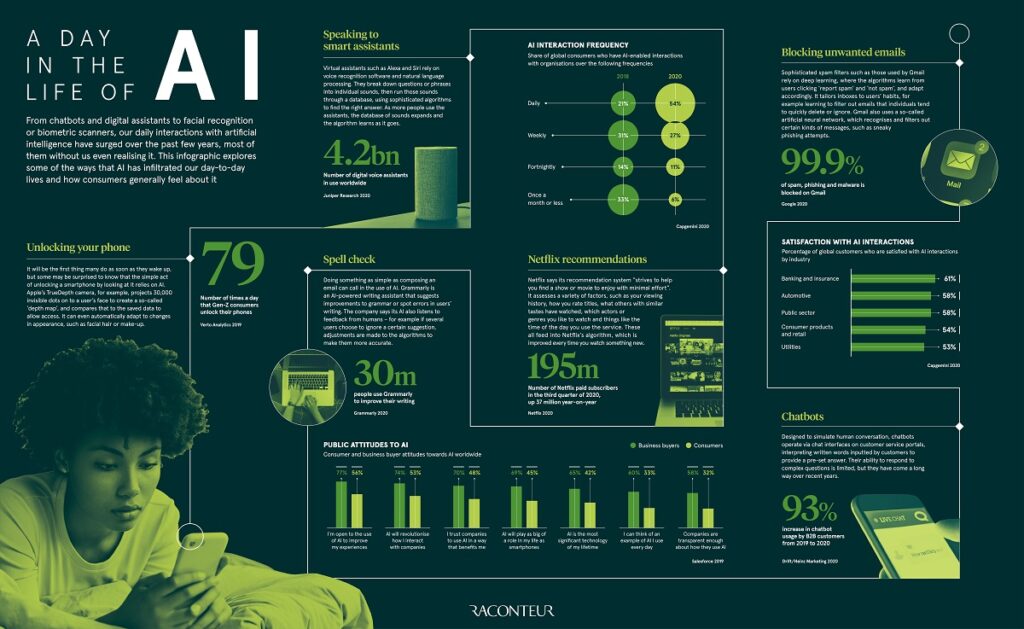
Most people interact with artificial intelligence dozens of times a day without realising it. AI systems already help us simplify tasks, save time, and improve convenience.
Common everyday examples include:
- Voice assistants that answer questions, set reminders, and control smart devices
- Recommendation systems on platforms like streaming services, social media, and online stores
- Smartphone cameras that automatically enhance photos using AI
- Navigation apps that predict traffic and optimise routes in real time
These systems are designed to reduce friction. Instead of forcing users to adapt to technology, AI adapts to the user — learning preferences, habits, and patterns over time.
As AI becomes more context-aware, it will increasingly anticipate needs rather than simply respond to commands.
AI at Work and Productivity
One of the most visible impacts of AI is in the workplace. Artificial intelligence is transforming how people work, not by replacing humans outright, but by reshaping workflows.
AI tools now support:
- Writing, editing, and summarisation
- Data analysis and forecasting
- Automation of repetitive administrative tasks
- Design, coding assistance, and prototyping
This shift allows professionals to focus on higher-value activities such as strategy, creativity, and decision-making. The future workplace will reward those who know how to work with AI, not compete against it.
Rather than eliminating jobs, AI is redefining them.
AI in Education and Learning
Education is undergoing a quiet revolution driven by artificial intelligence. Learning is becoming more personalised, adaptive, and accessible.
AI is already enabling:
- Personalised learning paths tailored to individual strengths and weaknesses
- Intelligent tutoring systems available on demand
- Faster feedback on assignments and assessments
- Skill-based learning that complements formal education
The future of education will place less emphasis on memorisation and more on problem-solving, critical thinking, and adaptability. AI will act as a learning companion — supporting learners at every stage of life.
AI in Healthcare and Wellbeing
Healthcare is one of the areas where AI has the greatest potential to improve quality of life. Used responsibly, artificial intelligence can support better outcomes while reducing pressure on professionals.
Key applications include:
- Early disease detection through medical imaging
- Predictive analytics for patient monitoring
- AI-assisted diagnostics and treatment planning
- Mental health support tools and wellbeing tracking
It is important to emphasise that AI does not replace human care. Instead, it enhances it by providing insights, reducing errors, and allowing healthcare professionals to focus on what matters most — the patient.
Ethical and Social Considerations
As AI becomes more integrated into daily life, ethical responsibility becomes critical. With increased capability comes increased risk.
Key concerns include:
- Data privacy and surveillance
- Algorithmic bias and fairness
- Over-reliance on automated systems
- Transparency and accountability
The future of AI must be guided by strong governance, responsible design, and human oversight. Technology should serve people, not the other way around.
The Human Role in an AI-Driven World
Artificial intelligence does not possess values, purpose, or moral judgement. Humans do.
In an AI-driven world, human qualities such as creativity, empathy, ethics, and critical thinking become even more important. AI can process information, but it cannot define meaning.
The people who thrive in the future will be those who understand how to question AI outputs, use technology responsibly, and apply human judgement where it matters most.
What the Future of AI Will Look Like
Looking ahead, AI will become less visible but more influential. Instead of interacting with separate tools, AI will exist as an intelligent layer across systems, devices, and services.
We can expect:
- More personalised and contextual AI experiences
- Seamless integration across platforms
- Smarter decision-support systems
- Greater emphasis on human-AI collaboration
The future is not about machines taking over. It is about intelligent systems quietly supporting human potential.
Conclusion: AI as a Partner, Not a Threat
The future of artificial intelligence in everyday life is not something to fear. It is something to understand, shape, and guide.
AI is a powerful tool — one that can improve productivity, enhance learning, support healthcare, and simplify daily life. When used responsibly, it becomes a partner rather than a threat.
Those who invest time in understanding AI today will be better equipped to navigate tomorrow’s world with confidence, clarity, and purpose.
Explore practical AI tools that are already shaping everyday life in our AI Marketplace.

Ready to Implement AI in Your Business?
Book a free 30-minute call and we’ll create a personalised AI strategy for your business.
Book Free Consultation →
Leave a Reply